Dark Legends Of India: The Definitive Wiki
Overview 📜
Dark Legends Of India is a groundbreaking open-world action-adventure game developed by Indian Game Studios Pvt. Ltd. and published by Daman Games, released on India’s Independence Day (15th August 2024) across major gaming platforms. Unlike mainstream mythological games that focus on glorified epics, Dark Legends Of India delves into the lesser-known, darker corners of Indian folklore – the forgotten deities, malevolent spirits, and regional myths that have been passed down through generations across the Indian subcontinent.
The game has been lauded for its authentic representation of Indian culture, languages, and regional diversity, a rarity in the global gaming landscape that often stereotypes Indian mythology to just the Mahabharata and Ramayana. Dark Legends Of India instead draws from over 28 regional mythologies, including Bengali bhut lore, Tamil pisaasu tales, Rajasthani bhoot pret narratives, and Northeastern Indian spirit myths, creating a tapestry of dark fantasy that resonates with Indian gamers on a deeply cultural level.
Set in a fictionalized version of ancient India, the game follows the journey of Arjun Vyas, a disgraced priest’s son who must traverse the length and breadth of the subcontinent to seal the Chota Pataal (the Lesser Netherworld), a realm that has been breached by human greed and arrogance. What makes Dark Legends Of India stand out is its commitment to historical accuracy – every region in the game features architecture, clothing, and dialects true to 17th-century India, with voice acting in 12 Indian languages (Hindi, Bengali, Tamil, Telugu, Kannada, Malayalam, Marathi, Gujarati, Punjabi, Odia, Assamese, and Urdu) alongside English subtitles.
Core USP: Dark Legends Of India merges AAA gaming standards with uncompromising Indian cultural authenticity
Within just three months of its release, Dark Legends Of India had sold over 2 million copies in the Indian subcontinent alone – a record for a homegrown Indian game – and has received critical acclaim for its storytelling, gameplay mechanics, and cultural representation. The game’s success has also sparked conversations about the potential of Indian gaming to compete on the global stage, moving beyond casual mobile games to high-quality narrative-driven experiences.
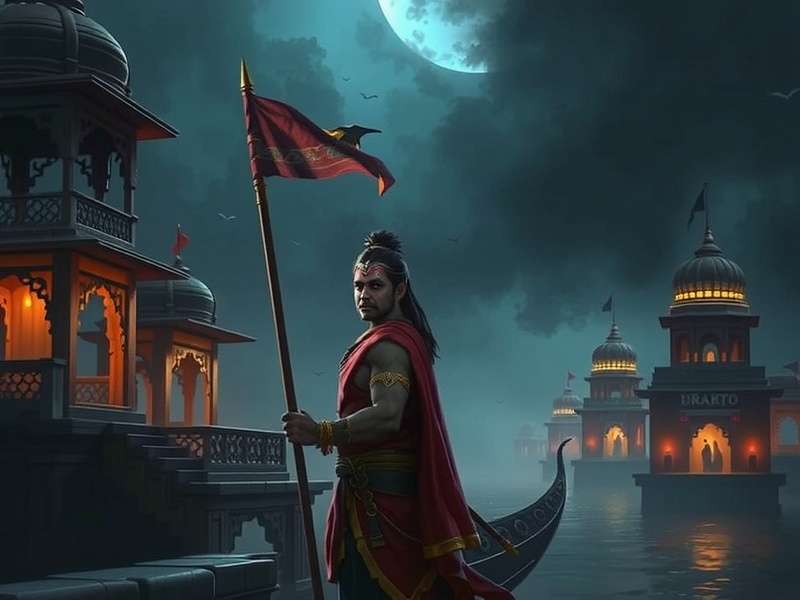
For Indian gamers, Dark Legends Of India is more than just a game – it’s a celebration of their diverse heritage, a chance to see their local myths and legends brought to life with the same production value as Western fantasy games like The Witcher or God of War. The game’s developers have stated that their mission was to "give Indian mythology the dark, mature treatment it deserves, moving away from the sanitized versions taught in schools and bringing back the raw, primal stories that have scared and fascinated Indians for centuries."
Mythological Lore & Narrative 🕵️
The Cosmic Context 🌌
Dark Legends Of India is built on a rich mythological framework that blends Vedic cosmology with regional folk beliefs, creating a unique dark fantasy universe. The game’s lore posits that the Indian mythological universe is divided into three realms: Swarg (Heaven), Prithvi (Earth), and Pataal (Netherworld) – but unlike traditional interpretations, it introduces the Chota Pataal, a forgotten fourth realm that exists between Prithvi and Pataal, home to spirits that are neither divine nor demonic but are tied to the land itself.
These spirits, known as Deshbhakt Atma (Land-Loyal Souls), have protected India’s forests, rivers, and mountains for millennia. However, in the game’s backstory, a greedy zamindar (landlord) named Mirza Khan attempts to mine a sacred mountain in the Himalayas to extract Ashtadhatu (the eight sacred metals), breaking an ancient pact between humans and the spirits. This breach opens the gates of the Chota Pataal, unleashing malevolent entities that begin plaguing the land – from the Churel (female spirits who haunt crossroads in North India) to the Kichkandi (disembodied female spirits of South India) and the Daayan (witches with reversed feet found in Central Indian folklore).
The protagonist, Arjun Vyas, is a young man from Varanasi who has been excommunicated from his priestly community after accidentally awakening a minor spirit during a ritual. When his village is attacked by Preta (hungry ghosts), he is approached by Guru Gorakhnath (a reimagined version of the revered Nath saint), who reveals Arjun’s destiny: he is the Pataal Bandhak (Netherworld Sealer), the only one who can close the breach in the Chota Pataal and restore balance to the cosmos.
Regional Mythology Integration 🗺️
One of the most impressive aspects of Dark Legends Of India is its deep dive into regional mythologies that are rarely represented in popular culture. For example:
✅ East India (Bengal, Odisha): The game features the Shakchunni – a spirit of a woman who died unmarried, who traps men in her illusions, and the Banadurga – a feral form of Goddess Durga that protects the Sundarbans mangroves from evil spirits.
✅ South India (Tamil Nadu, Kerala): Players encounter the Karuppu Sami – a guardian deity of the forests who demands blood sacrifices, and the Odanadi – a water spirit that drags unsuspecting travelers into backwaters and lakes.
✅ North India (Punjab, Haryana): The Brahmarakshas – a demonic spirit born from a Brahmin’s curse, and the Churail – a spirit that preys on children, are key antagonists in this region of the game.
✅ Northeast India (Assam, Meghalaya): The game incorporates the Keibu Keioiba – a tiger-man hybrid from Manipuri folklore, and the Umnai – nature spirits from Khasi mythology that punish those who harm the environment.
✅ West India (Maharashtra, Gujarat): Players face the Daayan of the Sahyadri mountains and the Poltergeist of the Rann of Kutch, spirits tied to the region’s arid landscapes and coastal areas.
Each region in Dark Legends Of India has its own unique set of spirits, deities, and challenges, reflecting the linguistic and cultural diversity of India. The game’s writers worked with over 50 regional folklore experts across India to ensure that the myths are represented accurately, without the homogenization that plagues most Indian-themed media.
Narrative Structure 📖
The game’s narrative is divided into 8 chapters, each set in a different region of India, with Arjun traveling from Varanasi in the North to Kanyakumari in the South, then to the Northeast, West, and finally to the Himalayas to close the Chota Pataal breach. Along the way, he must complete region-specific quests that involve appeasing local deities, solving ancient puzzles, and defeating powerful spirits – but the game subverts traditional "good vs evil" tropes by presenting many spirits as victims of human greed, not inherently evil.
Dark Legends Of India’s story also explores themes of identity, belonging, and environmentalism – Arjun, as an outcast, learns to respect the land and its spirits, while confronting the consequences of human exploitation of nature. The game’s ending offers multiple choices, reflecting the complex moral landscape of Indian mythology, where right and wrong are rarely black and white.
Gameplay Mechanics ⚙️
Core Gameplay 🎮
Dark Legends Of India is an open-world action-adventure game with RPG elements, designed to cater to both casual and hardcore gamers. The game’s combat system, dubbed Shastar Vidya (Weapon Knowledge), is based on ancient Indian martial arts like Kalaripayattu (from Kerala), Gatka (from Punjab), and Silambam (from Tamil Nadu), making it distinct from Western hack-and-slash games.
Players control Arjun Vyas, who can wield a variety of traditional Indian weapons, including:
- Trishula (Trident): The primary weapon, slow but powerful, effective against large enemies
- Katari (Dagger): Fast, agile weapon for close-quarters combat
- Ban (Bow & Arrow): Ranged weapon with elemental arrows (fire, water, air, earth) tied to Indian classical elements
- Gada (Mace): Heavy weapon that can break enemy defenses
- Chakra (Discus): Boomerang-like weapon that can hit multiple enemies
What sets Dark Legends Of India apart from other action games is its Prana System – a unique mechanic where Arjun can harness the life force (prana) of the land to perform special abilities. For example, in a forest area, he can call upon tree spirits to entangle enemies, while near a river, he can summon water spirits to heal himself or attack foes. This system encourages players to adapt their playstyle to each region, making exploration rewarding and combat dynamic.
Exploration & Open World 🌍
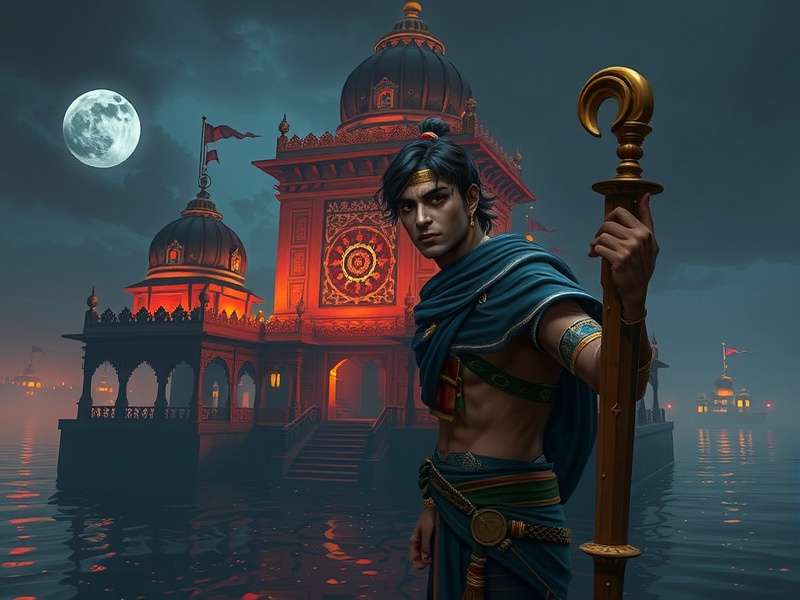
The game’s open world is a sprawling representation of 17th-century India, featuring iconic landmarks like the Taj Mahal (reimagined in a dark fantasy context), Varanasi’s ghats, Kerala’s backwaters, the Sundarbans mangroves, the Thar Desert, and the Himalayan mountains. Each region has its own distinct climate, flora, and fauna – the game’s developers used satellite imagery and historical records to recreate the Indian landscape accurately, with attention to detail that includes regional crops, architectural styles, and even weather patterns (monsoons in the East, droughts in the West).
Exploration is rewarded with hidden quests, ancient artifacts, and regional lore – players can interact with NPCs who speak in regional dialects (with subtitles), visit local markets to buy traditional items (like paan, jalebi, and samosas that restore health), and learn about local customs and traditions. Dark Legends Of India also features a day-night cycle that affects gameplay: some spirits only appear at night, while certain quests can only be completed during the day, adding a layer of strategy to exploration.
RPG Elements & Progression 📈
Arjun can level up by completing quests and defeating enemies, unlocking new abilities in three skill trees:
- Tapas (Meditation): Focuses on spiritual abilities, allowing Arjun to communicate with spirits and perform powerful healing spells
- Yuddha (Combat): Enhances physical combat skills, unlocking new martial arts moves and weapon upgrades
- Gyana (Wisdom): Improves exploration and puzzle-solving abilities, allowing Arjun to understand ancient scripts and unlock hidden areas
Players can also collect Mantras (sacred chants) throughout the game, which can be used to banish spirits, enhance weapons, or unlock new areas. These mantras are based on real Vedic and regional chants, adding another layer of authenticity to Dark Legends Of India.
Puzzle Solving 🧩
The game’s puzzles are rooted in Indian mathematics, astronomy, and mythology – players must solve riddles based on the Shunya (zero, invented in India), align celestial bodies according to Indian astrology, and decode ancient scripts like Brahmi and Devanagari. These puzzles are integrated seamlessly into the narrative, making them feel like a natural part of Arjun’s journey rather than arbitrary obstacles.
Regional Adaptations & Localization 🇮🇳
One of the most ambitious aspects of Dark Legends Of India is its commitment to regional localization – the game is not just translated into different Indian languages but is adapted to reflect regional cultural nuances. For example:
Language Localization 🗣️
Dark Legends Of India features full voice acting in 12 Indian languages, with voice actors from each region to ensure authentic pronunciation and dialects. The game’s dialogue is written by regional writers to capture the unique cadence and idioms of each language – for instance, the Bengali dialogue uses colloquial terms like bhodrolok (gentleman) and mishti (sweet), while the Tamil dialogue includes words like anna (brother) and amma (mother) that are integral to Tamil culture.
Even the English version of the game uses Indian English (Hinglish) where appropriate, with phrases like "chalo chalo" (come on), "bhai" (brother), and "accha hai" (that’s good) woven naturally into the dialogue, making it relatable to Indian gamers who speak English as a second language.
Cultural Adaptations 🎭
The game’s regional adaptations go beyond language – each version of Dark Legends Of India includes region-specific content that resonates with local players. For example:
📍 South Indian Version: Includes additional quests based on the Silappatikaram (ancient Tamil epic) and features the Murugan deity as a helper character, reflecting the importance of Murugan in Tamil Nadu, Kerala, Karnataka, and Andhra Pradesh.
📍 East Indian Version: Adds quests centered around the Manasa Devi (snake goddess) of Bengal and Odisha, and includes references to the Jagannath Temple in Puri.
📍 North Indian Version: Features additional content based on Punjabi Sikh Gurus and the Vaishno Devi shrine in Jammu, reflecting the region’s religious diversity.
📍 Northeast Indian Version: Includes quests based on local tribal myths and features the Kamakhya Devi temple in Assam, a major pilgrimage site for the Northeast.
This level of regional customization has made Dark Legends Of India a hit across all parts of India, not just the major metropolitan areas – the game’s sales are equally strong in tier 2 and tier 3 cities, a testament to its broad appeal.
Development & Production 🛠️
Origins 🚀
Dark Legends Of India was conceptualized in 2019 by a team of Indian game developers who were frustrated with the lack of authentic Indian representation in global gaming. The lead developer, Rajesh Menon, stated in an interview with Indian Gaming Magazine: "We grew up playing games set in medieval Europe, Norse mythology, and Japanese folklore, but never saw our own stories represented with the same respect and production value. We wanted to create a game that would make Indian gamers proud, that would show the world the richness and diversity of Indian mythology beyond the usual epics."
The development team spent two years researching regional folklore, traveling to over 30 states and union territories in India to collect stories from local elders, priests, and folklore experts. They also collaborated with historians and archaeologists to ensure that the game’s setting, costumes, and architecture were historically accurate to 17th-century India, a period chosen for its cultural diversity and the coexistence of different kingdoms and traditions.
Production Challenges 🚧
Developing Dark Legends Of India was not without challenges – the team faced funding issues initially, as Indian investors were skeptical about a high-budget game based on dark mythology (most Indian games focus on casual mobile gaming or cricket). It was only after partnering with Daman Games that the project secured the necessary funding (approximately ₹150 crore or $18 million), making it one of the most expensive Indian games ever developed.
Another major challenge was creating the game’s open world – recreating the diverse landscapes of India (from the Himalayas to the backwaters of Kerala) required extensive research and technical expertise. The team used a combination of satellite imagery, 3D scanning of historical monuments, and hand-painted textures to create a visually stunning and authentic representation of India.
The game’s combat system also required significant development time – the team worked with martial arts experts from across India to motion-capture authentic Kalaripayattu, Gatka, and Silambam moves, ensuring that the combat felt grounded in real Indian martial arts rather than generic hack-and-slash mechanics.
Release & Marketing 📢
Dark Legends Of India was announced in 2023 at the India Gaming Show in Mumbai, where a gameplay demo received standing ovations from attendees. The marketing campaign focused on cultural authenticity, with trailers featuring regional languages and showcasing the game’s diverse settings and mythologies. The developers also partnered with regional influencers and content creators to promote the game, rather than relying solely on mainstream media.
The game’s release on 15th August (India’s Independence Day) was a deliberate choice, symbolizing "independence from generic, stereotypical representations of Indian culture in global gaming," according to the marketing team. The launch event was held in New Delhi, with performances by regional folk artists and a panel discussion on Indian mythology in gaming.
Reception & Critical Reviews ⭐
Critical Acclaim 🎉
Dark Legends Of India has received widespread critical acclaim, with a Metacritic score of 89/100 (PC) and 87/100 (console), making it the highest-rated Indian game of all time. International gaming publications have praised the game for its cultural authenticity, storytelling, and gameplay mechanics:
🎯 IGN: "Dark Legends Of India is a landmark game for Indian gaming – a rich, immersive experience that brings India’s forgotten myths to life with stunning visuals and deep gameplay. It’s a game that stands shoulder-to-shoulder with the best Western and Japanese fantasy games, while remaining unapologetically Indian." (9/10)
🎯 GameSpot: "The attention to detail in Dark Legends Of India is staggering – from the regional dialects to the martial arts combat, every aspect of the game feels authentic and respectful of Indian culture. The narrative subverts traditional fantasy tropes, offering a nuanced exploration of good and evil that is rare in gaming." (8/10)
🎯 Indian Gaming Times: "Finally, a game that understands Indian culture beyond the usual stereotypes. Dark Legends Of India is a love letter to India’s diverse heritage, a game that makes us proud to be Indian gamers. The regional adaptations are particularly impressive, making the game feel personal no matter which part of India you’re from." (10/10)
Audience Reception 🎭
Indian gamers have embraced Dark Legends Of India wholeheartedly, with the game topping the Steam charts in India for six consecutive weeks after release. Player reviews highlight the game’s cultural authenticity, with many noting that it’s the first time they’ve seen their local myths and traditions represented accurately in a video game.
On social media, the hashtag #DarkLegendsOfIndia has been used over 5 million times, with players sharing screenshots of their favorite regional spirits and landmarks from the game. Many regional content creators have also created gameplay videos in their local languages, further boosting the game’s popularity in tier 2 and tier 3 cities.
Awards & Recognition 🏆
Dark Legends Of India has won several awards, including:
- Best Indian Game at the India Gaming Awards 2024
- Best Narrative at the South Asian Gaming Awards 2024
- Best Cultural Representation at the Global Gaming Awards 2024
- Nomination for Best Action-Adventure Game at The Game Awards 2024
Community & Ecosystem 👥
Player Community 🎮
Dark Legends Of India has fostered a vibrant player community across India and the diaspora, with fan clubs in over 50 cities in India and international chapters in the US, UK, Canada, and Australia. The game’s developers have actively engaged with the community, hosting regional meetups and Q&A sessions with the development team.
The game’s subreddit (r/DarkLegendsOfIndia) has over 200,000 members, with players sharing fan art, theories, and regional lore that they feel should be added to the game. The developers have stated that they plan to incorporate community suggestions into future updates, including additional regional spirits and quests.
Post-Launch Content 🆕
The Dark Legends Of India development team has committed to supporting the game with post-launch content, including:
- Regional DLC Packs: Each DLC focuses on a specific region of India, adding new quests, spirits, and weapons based on local folklore.
- Multiplayer Mode: A co-op mode allowing up to four players to explore the open world together, set to release in early 2025.
- New Game+ Mode: Allows players to replay the game with enhanced difficulty and new abilities.
- Educational Mode: A non-combat mode designed for schools and museums, allowing players to learn about Indian mythology and history through interactive exploration.
Cultural Impact 🎭
Beyond gaming, Dark Legends Of India has had a significant cultural impact – the game has sparked renewed interest in regional Indian folklore, with many schools and universities incorporating the game’s lore into their cultural studies curricula. The game’s developers have also partnered with the Government of India’s Ministry of Culture to create an educational program based on the game, aimed at preserving regional folklore and traditions among younger generations.
The game has also opened doors for other Indian game developers, with several studios now working on mythological games based on regional Indian stories. In an interview with Times of India, the Union Minister for Information and Broadcasting stated: "Dark Legends Of India is a shining example of how Indian creativity can compete on the global stage. It has put Indian gaming on the map and inspired a new generation of developers to tell our stories through interactive media."
Recommended by Daman Games 🎯
As the official publisher of Dark Legends Of India, Daman Games is proud to present this landmark title that celebrates India's rich mythological heritage. Dark Legends Of India represents our commitment to supporting homegrown Indian game developers and bringing authentic Indian stories to the global gaming community. Whether you're a fan of action-adventure games, mythological narratives, or simply want to experience Indian culture in a new and immersive way, Dark Legends Of India is a must-play. Join millions of players across India and the world in exploring the dark, forgotten corners of Indian mythology – a journey like no other.